Monday, October 12, 2020

196 Books: Finland


 Troll: A Love Story by Johanna Sinisalo


Finland is way up here:


Here's the summary:
Angel, a young photographer, comes home from a night of carousing to find a group of drunken teenagers in the courtyard of his apartment building, taunting a wounded, helpless young troll. He takes it in, not suspecting the dramatic consequences of this decision. What does one do with a troll in the city? As the troll’s presence influences Angel’s life in ways he could never have predicted, it becomes clear that the creature is the familiar of man’s most forbidden feelings. A novel of sparkling originality, Troll is a wry, beguiling story of nature and man’s relationship to wild things, and of the dark power of the wildness in ourselves.

A couple of weekends ago we were Soldier's family, and I was debating with the guys about trophy hunting. It was pretty much 3 on 1: they're all hunters and would do some trophy hunting if they could; I argued that it's bad for a number of reasons. One of these reasons was that we're just decimating these species for our own vanity. I broadened my argument to how we increase the size of our cities, cut down the forests, push animals out of their natural homes, and then kill them for being a nuisance or bothering our suburban existence. That bothers me. Now to the book! This book spoke to our urban sprawl a little bit. 

So Angel finds this troll. And in the book, trolls are just wild animals in northern Europe and Russia (maybe in North America too, I don't really remember it speaking to that area much). The troll is obviously hurt or sick and Angel takes it in, then ends up falling in "love" with it. Listen, I understand. I'm pretty obsessed with my cat. But here's the thing: a wild animal is still a wild animal. I'll see articles or Instagram posts about these wild animals that someone has raised and now thinks they're domesticated. But I feel like most people are just kind of waiting for it to go very, very wrong. 
SPOILER. 
The troll situation goes very, very wrong. He injures one guy and kills another. So Angel decides to flee with the troll (who he's named Pessi). 
BIG SPOILERS
It turns out the trolls have learned and evolved a bit; they can use human "tools" and seem to want to take over. So Angel and Pessi find some bigger trolls and they kind of take Angel hostage. And that's it. Which, I usually have a hard time with an ending that leaves a lot to the imagination, but this one didn't really bother me. 

One thing that was really cool was the story was interspersed with news articles, book passages, poems, and the like. Information and stories about trolls as if they're bears or moose. It was the "research" that Angel did to learn how to take care of Pessi. 
This was such a cool book. I loved the folklore turned into a modern story. It would make me want to go to Finland, except it's cold there. 

Saturday, October 3, 2020

196 Books: Fiji

 Fiji by Lance Morcan and James Morcan


Fiji is an island I would like to be on right now:


Here's the nutshell of the book:
By the mid-1800's, Fiji has become a melting pot of cannibals, warring native tribes, sailors, traders, prostitutes, escaped convicts and all manner of foreign undesirables. It's in this hostile environment an innocent young Englishwoman and a worldly American adventurer find themselves.

Susannah Drake, a missionary, questions her calling to spread God's Word as she's torn between her spiritual and sexual selves. As her forbidden desires intensify, she turns to the scriptures and prayer to quash the sinful thoughts - without success.

Nathan Johnson arrives to trade muskets to the Fijians and immediately finds himself at odds with Susannah. She despises him for introducing the white man's weapons to the very people she is trying to convert and he pities her for her naivety. Despite their differences, there's an undeniable chemistry between them.

When their lives are suddenly endangered by marauding cannibals, Susannah and Nathan are forced to rely on each other for their very survival.

It was a bit difficult to find a book for Fiji, and I ended up having to go with this father/son duo from New Zealand. But I kinda thought that might be close enough? And, honestly, this was exactly the book I needed right now. I usually have about 3 books going at a time, and most of them have been heavy and full of war and hate. Add that to what's happening in the world and I pretty much lived in a hole of anger, sadness, and despair. 

So this book was just a fun, frivolous, cheesy romance. There did seem to be a lot of research into the history of it, and some (I assume real) native words and customs were thrown in, which I love. I keep meaning to mention it; I love when authors throw in a word native to that country and then say what it is. I don't remember any of them, but I feel like I'm learning something at the time. 
Don't get me wrong, I rolled my eyes a bunch of times because it was the predictable, chauvinistic love story. The only thing I can say is that they at least didn't describe every woman solely by their physical features that inevitably resemble Barbie proportions. But it was also this guy who started out as a headstrong, egotistical asshole who meets this devout, beautiful woman and she completely changes his mind in a matter of like two weeks. So then he becomes a completely different person which is of course absolutely understandable. Could you sense my sarcasm?

Okay, I'll stop hating now. Like I said, I needed this book. Obviously, since I read it in less than a week. It was exciting and kept me interested and didn't make me think too hard. I loved it. Guys. Things are hard right now. I decided it was okay to not take on all the problems of this history of the world and then do nothing to help solve them. At least for now. 

Saturday, September 26, 2020

196 Books: Ethiopia

 Beneath the Lion's Gaze by Maaza Mengiste 


Here's Ethiopia:


Here's the summary:
This memorable, heartbreaking story opens in Addis Ababa, Ethiopia, 1974, on the eve of a revolution. Yonas kneels in his mother’s prayer room, pleading to his god for an end to the violence that has wracked his family and country. His father, Hailu, a prominent doctor, has been ordered to report to jail after helping a victim of state-sanctioned torture to die. And Dawit, Hailu’s youngest son, has joined an underground resistance movement—a choice that will lead to more upheaval and bloodshed across a ravaged Ethiopia.

Beneath the Lion’s Gaze tells a gripping story of family, of the bonds of love and friendship set in a time and place that has rarely been explored in fiction. It is a story about the lengths human beings will go in pursuit of freedom and the human price of a national revolution. Emotionally gripping, poetic, and indelibly tragic, Beneath The Lion’s Gaze is a transcendent and powerful debut.

Oh my word. This book was incredible. But man, SO dark. I keep being drawn to war themed books, and I don't know if I have some sort of sick fascination or if I feel like that history should be remembered. Could be both, I guess. The way the author told the story of this family during the revolution was heartbreaking and so compelling. They each had different views and feelings of responsibility on what was happening in their world and how to deal with it. 

But, as with most of the war stories I've read, the inhumanity is gut-wrenching. Have we all figured out by now that torture doesn't actually work? Is that a thing that can go away? Has anyone figured out that just murdering all your opponents isn't the best plan in the long run? There was one quote about this that I found interesting: "That's what a new government will fix. These rich elites are nothing but traitors to their people, and until we get rid of all of them, nothing will change!" But then the enemy changes or people become disenfranchised or whatever. One thing I find super interesting, and it's happened in many of the civil war/coup d'etat books I've read, is that one dictatorship or undesirable regime gets overthrown and the new system is exactly the same. Or worse. The torture used in this one was sickening-there were honestly times where I was really into the story but had to stop reading because it was making me sick to my stomach. 

Seriously. This book was amazing. Mostly the way she wove the relationships and how they were affected by the war. But she was also really good at describing the awful torture. So, I guess that's nice. 

Anyway, that's it for the letter E! Moving on!


Wednesday, September 9, 2020

196 Books: Estonia

 When the Doves Disappeared by Sofi Oksanen


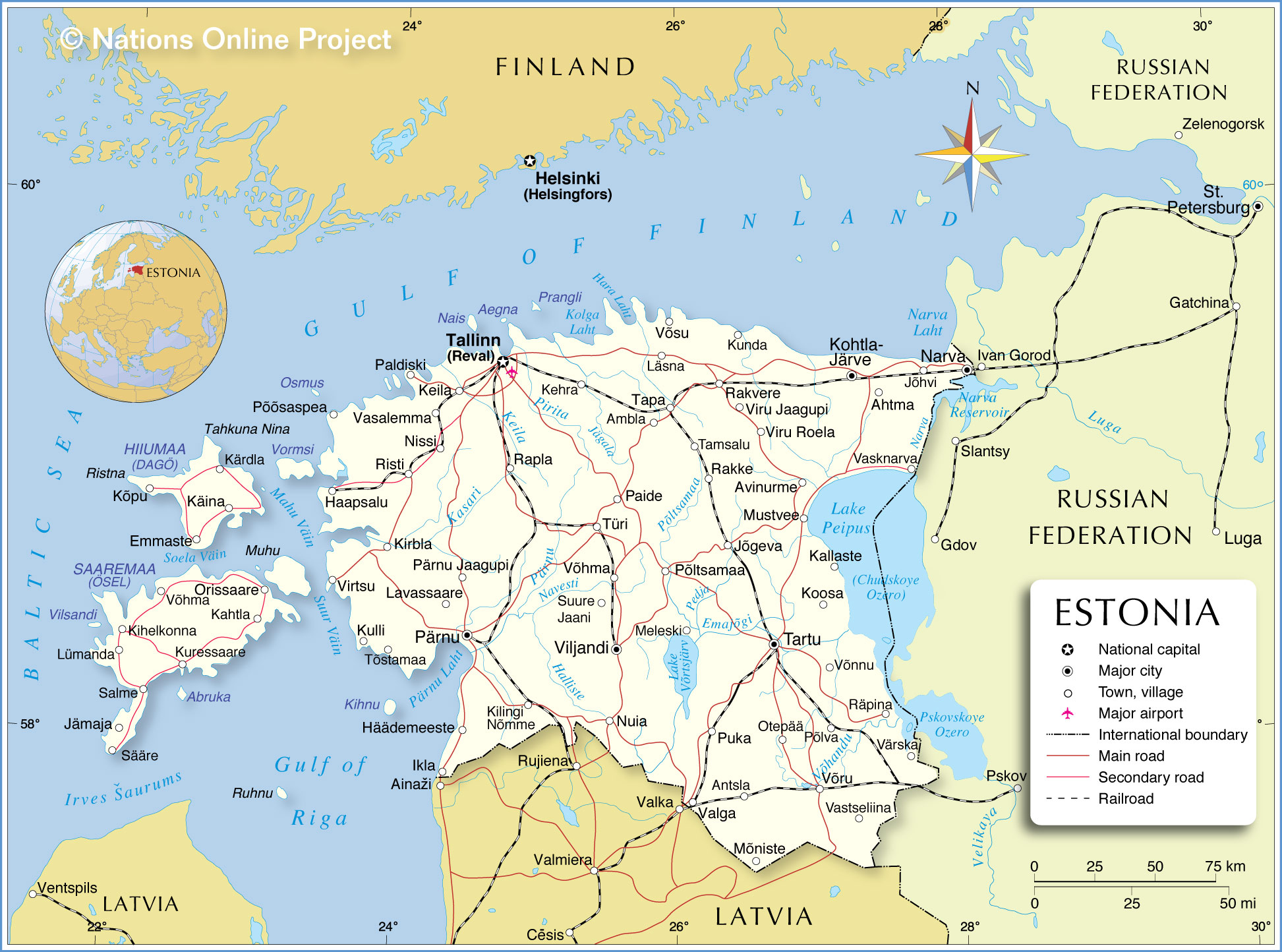
Estonia is in northern Europe:


And the summary:

1941: In Communist-ruled, war-ravaged Estonia, two men are fleeing from the Red Army—Roland, a fiercely principled freedom fighter, and his slippery cousin Edgar. When the Germans arrive, Roland goes into hiding; Edgar abandons his unhappy wife, Juudit, and takes on a new identity as a loyal supporter of the Nazi regime . . . 1963: Estonia is again under Communist control, independence even further out of reach behind the Iron Curtain. Edgar is now a Soviet apparatchik, desperate to hide the secrets of his past life and stay close to those in power. But his fate remains entangled with Roland’s, and with Juudit, who may hold the key to uncovering the truth . . .

Great acts of deception and heroism collide in this masterful story of surveillance, passion, and betrayal, as Sofi Oksanen brings to life the frailty—and the resilience—of humanity under the shadow of tyranny.


I think it's rather obvious that I'm kind of fascinated with WWII. Some of these books have shown me, as this one has, just how much of a bubble my history education has been. Like Egypt, this is another example of a country that welcomed Germany and hoped for their victory. 

In the 1940s sections of the book, the Bolsheviks trying to take over Estonia, and Germany is trying to run them out and "free" Estonia. So, honestly, it makes sense for them to support Germany and be glad of that occupation. Of course, as the years pass, it comes out what Germany is actually doing with the Jews and those they deem undesirable. But, and this feels horrible to say, but I felt sad when the Soviet Union prevailed and then just took over the country again. So in the 1960s sections they're under Communist rule and still don't get to have their country back. 

So then we come to the characters. On one extreme you have Roland, who stuck to his principles and fought to have his country back. At the other extreme you have sneaky, cunning, douchebag Edgar. Who I obviously hated. There's something so cowardly about a person who can put on a different mask for any occasion and who will lie, cheat, steal, kill, and otherwise do anything needed to gain favor and power. And Juudit was kind of in the middle, really just trying to get through life and be somewhat happy.

Here's the bad part: the story was good and entertaining, but the ending was completely unsatisfying. The bad guy prevailed. And he basically sacrificed his family to get there. And while I truly believe self-preservation is extremely persuasive, it's not the same as severe selfishness. 

Wednesday, August 12, 2020

196 Books: Eritrea

 The Consequences of Love by Sulaiman Addonia


Here's Eritrea, in Africa:


Here's the summary:
A Romeo and Juliet story set against the strict Muslim laws of Saudi Arabia, Sulaiman Addonia’s astonishing debut novel is a sensuous and intensely wrought story of a young immigrant and a girl behind a veil who defy law and risk their lives to be together.

Under a relentless summer sun, women dressed like long dark shadows and men decked out in light cotton robes roam the streets of Jeddah. While most of Naser’s friends have left town to escape the heat, he must stay behind to work. An African immigrant and outsider, Naser spends his spare time frequenting a friend’s café, writing letters to his mother in Eritrea, and daydreaming about the glamorous girlfriend he hopes to one day have.

Naser and his younger brother were sent to Saudi Arabia to avoid the war back home, but though they live with their conservative Muslim uncle they remain under the watchful, wrathful eyes of the religious police, who monitor the community’s every action, govern the near indestructible boundaries between men and women–walls in mosques, panels on buses, separate visiting quarters in houses, and, of course, the black veil, or abaya, that adorns the women–and punish any disobedience by public beating or death.

But a splash of color arrives in Naser’s world when unexpectedly a small piece of paper is dropped at his feet. It is a love note from a girl whose face he has never seen and whose voice he has never heard. To identify her among the sea of veiled women, she instructs him to look for a pair of pink shoes peeking out from under her draped abaya. Intrigued and encouraged, Naser rebels against Wahhabist Islamic convention and begins a clandestine correspondence with the girl. Yet even as the barriers that divide them begin to crumble under the weight of their passionate prose and devotion, the lovers’ illicit affair will face the ultimate and most heartrending test.


First let me complain that Google changed the format of the blog and now it doesn't show me where my readers are from and it's DUMB. I like seeing where you all come from! 

This is another book with a cool author--he was born in Eritrea, lived in a refugee camp in Sudan, then lived in Saudi Arabia before seeking asylum in London. Even though this book has the standard disclaimer of it all being fictional, I wonder how much of it he lived. Oh! There will also be spoilers sprinkled in this one, so beware!


I feel like I kind of cheated on this one because I knew it wasn't set in Eritrea. The only part set there is when Naser and his brother are being sent away from the war, and the rest is in Saudi Arabia. I picked it because there weren't very many choices, and it sounded SO GOOD (and it was). Even though I knew it would give me anxiety the whole time, which of course it did. 
We go through a little bit of Naser's early life and the difficulty of being a foreigner in Saudi Arabia. Every immigrant has to have a sponsor (kafeer) who basically controls their life. At an early age (11 or 15 I think), Naser's uncle's kafeer decides that in lieu of the increased monthly price, he will take Naser as payment. When he runs away from the uncle's house, he lives and works in a cafe where he is also basically treated as a sex slave. 
So, here's the biggest WTF in the book: men can't have anything to do with women, but it's fine to rape young boys. WHY IS EVERYONE ALWAYS HATING ON THE WOMEN?! 

When Naser gets the note from the girl, I instantly was yelling at him in my head. I was torn the entire time between "this whole system is such bullshit just let them talk to each other" and "you gotta follow the rules or it's gonna be real bad for you, bro!" They went to great lengths to communicate with each other and I was just waiting for them to get caught. It's a good thing I read it in an ebook form or I would have cheated and read the ending. SPOILER! He ends up getting betrayed, caught, and deported. At least he wasn't killed, I guess. 

But-ugh-this book did not paint Saudi Arabia in a good light. Everyone was deceitful and tricksy. Women had to wear the abaya, which is the entire body being covered-not even the eyes can show. Women have no control over their lives, refugees are beholden to their kafeers, and then there's the whole sharia law with the religious police (which kind of just seemed like police in general). When someone breaks the law, there's a public square where they get flogged, stoned, or beheaded, and everyone comes out to cheer and yell that the lawbreaker is going to hell. 
I'm guessing this book was set in the 80s, so maybe it's better now? Didn't women even get the right to drive a couple years back? I'm not sure if I'm being hopeful or sarcastic. Maybe I'll find out when I hit Saudi Arabia on my reading trip. 


Monday, August 3, 2020

196 Books: Equatorial Guinea

By Night the Mountain Burns by Juan Tomas Avila Laurel

Equatorial Guinea is on the west African coast:

The summary:
By Night the Mountain Burns recounts the narrator's childhood on a remote island off the West African coast, living with his mysterious grandfather, several mothers and no fathers. We learn of a dark chapter in the island's history: a bush fire destroys the crops, then hundreds perish in a cholera outbreak. Superstition dominates, and the islanders must sacrifice their possessions to the enraged ocean god. What of their lives will they manage to save? Whitmanesque in its lyrical evocation of the island, Ávila Laurel’s writing builds quietly, through the oral rhythms of traditional storytelling, into gripping drama worthy of an Achebe or a García Márquez.

I also want to include the information about the author because I found it really interesting:
"Juan Tomas Avila Laurel was born in 1966 in Equatorial Guinea, Africa's only Spanish-speaking country. His parents were from the remote Annobon Island, off the West African coast. 
...Avila Laurel has been a constant thorn in the side of his country's long-standing dictatorial government. A nurse by profession, he was for many years one of the best known Equatorial Guinean writers not to have opted to live in exile. But in 2011, after a week-long hunger strike in protest against Obiang's regime, which he timed to coincide with the president of Spain's visit to Equatorial Guinea, Avila Laurel moved to Barcelona. He writes across all media, and is particularly active as a blogger, essayist, and novelist." 

This guy sounds like such a badass. 

This book totally messed with my mind because, for the majority of it, it sounds like it's set in the 1800s or something, but then there would be mention of a radio or an air purifier. And then when you find out Avila Laurel was born in 1966, it had to have taken place in the 70s. But he would talk about ships coming from other countries and I still imagined wooden pirate-looking ships.

One thing I found very interesting was that the author attributed all the bad things stemming from one incident. It was an incident involving a woman being violated with an object. Granted, she was being beaten to death by a mob, but the violation struck him so much that he blamed all of the other bad things on this. Interesting how this kid can understand how horrific something like that is, and yet grown men keep doing it.

I would have liked to hear more of his older life and how he left the island. (I'm assuming he left the island and went to live on mainland Equatorial Guinea. Btw, Equatorial Guinea is really hard to spell/type.) There's also one point that didn't make sense to me-he says he's not a writer and that the stories came from an outsider wanting to capture their folk tales. I guess it could have started that way, but he obviously is a writer so...shrug.

Anyway, this was another example of why it's so cool to do this "challenge" and learn about so many different places and cultures. I feel like my mind broadens with every book...even the ones I don't like.

Wednesday, July 1, 2020

196 Books: El Salvador

Senselessness by Horacio Castellanos Moya


El Salvador is in the middle of Central America:


Honestly I didn't really know where it was. 


Summary:
A boozing, sex-obsessed writer finds himself employed by the Catholic Church (an institution he loathes) to proofread a 1,100 page report on the army's massacre and torture of thousands of indigenous villagers a decade earlier, including the testimonies of the survivors. The writer's job is to tidy it up: he rants, "that was what my work was all about, cleaning up and giving a manicure to the Catholic hands that were piously getting ready to squeeze the balls of the military tiger." Mesmerized by the strange Vallejo-like poetry of the Indians' phrases ("the houses they were sad because no people were inside them"), the increasingly agitated and frightened writer is endangered twice over: by the spell the strangely beautiful heart-rending voices exert over his tenuous sanity, and by real danger—after all, the murderers are the very generals who still run this unnamed Latin American country.

The first thing I noticed about this book is that the author was apparently trying to see how few periods he could use. I'm not being dramatic-he would use half a page with one sentence. Dude, if you have to use twenty commas, you need to revise. It seriously stressed me out. Then I realized how short the book was and decided I could suck it up. 

The mental anguish of having to proof the report seemed very real, and through the villagers' phrases, you could absolutely imagine how it would take a toll. He became obsessed with relaying these phrases to others and wanting them to see the beauty in them. He wasn't a terribly likable character. But as far as the real danger...I didn't get that feeling till the very end. It seemed more like the narrator was just becoming really paranoid. 

As I looked more into it people said that the unnamed Latin American country was most likely Guatemala. So not only was it a mediocre book, it wasn't even set in the right country. I really need to do better at vetting them. 

I also had kind of a wave of tiredness come over me when I sat down (on the floor of a sad, mostly empty room since we're in the process of moving) to write this. Why am I doing it? Who cares? I guess it's kind of a way to keep track of the books I've read, but really I could just make a list of them. I dunno. I'm in a funk right now because of the move and everything else that's going on in the world, so I'm not going to stop doing all this right now. But we'll see. Time to vet some new books I guess.